

 |
 |
 |
 |
 |
 |
 |
 |
 |
 |
 |
|

HIV/AIDS and Child Care: Fact Book and Facilitator’s Guide |
|
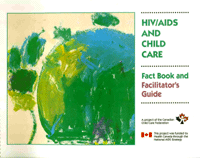
Canadian Child Care Federation, 1995; National Association for the Education of Young Children, 1995. 44 pages. ISBN 0-9696697-1-2. |
A resource written with the child care setting in mind! Although the risk of transmission of HIV in child care is virtually nil, the fear surrounding it touches educators and parents alike. This book helps to dispel that anxiety. It includes not only pertinent, user-friendly information on HIV but also a guide for preparing staff and parents to welcome children with HIV into child care and for developing policies that serve the best interests of all children in the program. |
What readers say about HIV/AIDS and Child Care“This manual is a fabulous resource and tool.
Everyone should have one.” “Thank you for demystifying this critical issue.” “Extremely interesting and helpful.” Excerpts from HIV/AIDS and Child CareWhy is confidentiality necessary? The fear and stigma attached to HIV may mean that those affected are discriminated against and ostracized. Confidentiality protects their privacy and enables them to be treated fairly. It is hard to keep a secret. No one intends to tell, but gossip has a life of its own. If people aren’t well informed, a rumour could set off a panic at the centre or cause problems for the family with work, insurance, housing, family or friends. Those people who have participated in high risk activities are more likely to seek testing and treatment if they know their test results will be kept confidential. Confidentiality therefore works to prevent the spread of the disease, protecting all of us. Keeping information confidential is a way to accord people the respect and dignity that everyone deserves. If parents believe that their personal information will be kept private, they will be more inclined to tell the supervisor that their child is infected with HIV—which is probably better for the well-being of the child and the family. Do the parents of other children have a right to
know? How can I deal with my anxiety about caring for
a child who is infected with HIV?
If you are sexually active, you may be at more risk in your personal life than you are in your professional one. Remember that using latex condoms is even more important than using latex gloves! If you are starting a new relationship or contemplating pregnancy, consider having yourself and your partner tested. If you have adolescent or adult children who may be at risk, talk to them about HIV. If you’re afraid of the responsibility that comes with caring for a child infected with HIV, remind yourself of what your early childhood training and experience have taught you, and focus on putting it into practice. Remember that a child infected with HIV is first and foremost a child. Your commitment to providing a secure, creative, and caring environment for all the children will see you through. This material is copyrighted and may not be reproduced in any manner or medium without written permission. For information, contact jud...@challengingbehavior.com.
|
|
